Extra heaters, fairy lights and decorations add fire risk every winter. What the law expects, what fire services advise, and a simple closedown routine.
Every winter the same things appear at work: a fan heater under a desk, fairy lights round the window, paper chains across the ceiling and a tree by the door. None of it is banned. But each one adds either something that can start a fire or something that will burn, and the risk rises when the two end up side by side.
Seasonal changes and your fire risk assessment
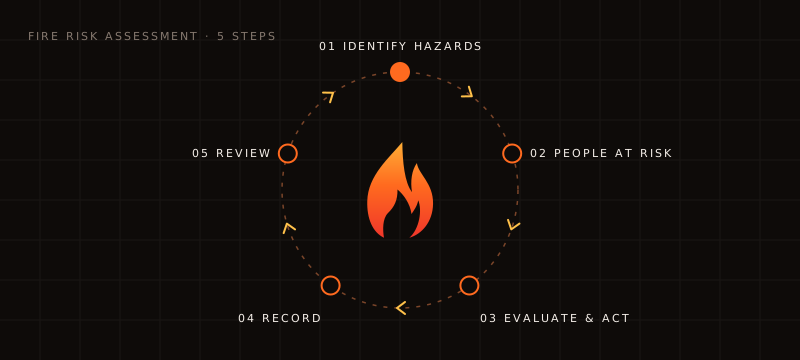
The Regulatory Reform (Fire Safety) Order 2005 says the responsible person must review the fire risk assessment regularly, and in particular when there has been a significant change. The government’s fire safety guide for offices and shops says your assessment should consider the extra risk from seasonal products such as Christmas decorations, and lists new equipment as a reason to review.
That doesn’t mean a new assessment every December. It means asking whether your assessment covers what is actually in the building this winter: extra heaters, extra stock, decorations and temporary staff. If it doesn’t, review it and write down what you’ve decided. The law requires a record of every assessment and every review.
Portable heaters
The same government guide says staff should be discouraged from bringing in their own portable heaters. Where heaters are needed, it prefers convector or fan heaters to radiant ones, secured in position where possible and kept clear of anything combustible. Portable heaters running on bottled gas (LPG) should only be used in exceptional circumstances, where the risk assessment shows they are acceptable, and gas heating should be serviced every year by a competent person.
Fire service advice adds some simple rules:
- Keep heaters at least a metre from anything that can burn, including paper, coats, curtains and boxes.
- Stand them on a flat, stable surface, ideally choosing a model with tip-over protection.
- Never use one to dry wet clothes or towels.
- Don’t overload sockets or extension leads, and don’t run a heater from a coiled cable drum.
- Switch heaters off when the room is empty.
- Check plugs and cables for damage and take anything faulty out of use.
Keep heaters out of corridors and stairways too: the government guide says they should not be kept on any escape route.
On testing, HSE guidance says the law simply requires electrical equipment to be maintained to prevent danger, and that it is a myth that every appliance in a low-risk workplace needs testing every year. Even so, a heater brought in from home, with no history, deserves a proper look before it is plugged in, so decide who checks heaters and where they can go.
Christmas lights and decorations
Decorations are fuel. The government guide lists them alongside packaging and stationery as things that burn, and Essex County Fire and Rescue Service warns that they are usually very flammable and advises against hanging them from overhead lights or around lamps.
- Buy lights from reputable sellers and check they carry the British Safety Standard sign.
- Use lights that are in good repair and new or PAT tested. LED sets don’t get as hot as older ones.
- Don’t attach decorations to lights or heaters, and keep decorations, trees and cards away from radiators.
- Choose flame-retardant decorations where you can.
- Don’t use block adaptors or overload sockets, and don’t trail flexes across doorways or under carpets and mats.
- If you have a real tree, water it every day. Essex fire service says a dry tree can go up in flames in less than a minute.
Keep exits, signs and alarms clear
Under article 14 of the Fire Safety Order, routes to emergency exits and the exits themselves must be kept clear at all times, and emergency doors must not be locked or fastened so that they can’t be opened easily and immediately.
- Don’t let trees, displays or extra stock block escape routes or fire exits, even for a short time.
- Don’t put Christmas lights on escape routes.
- Keep decorations off fire safety signs and extinguishers, and away from fire alarm sensors.
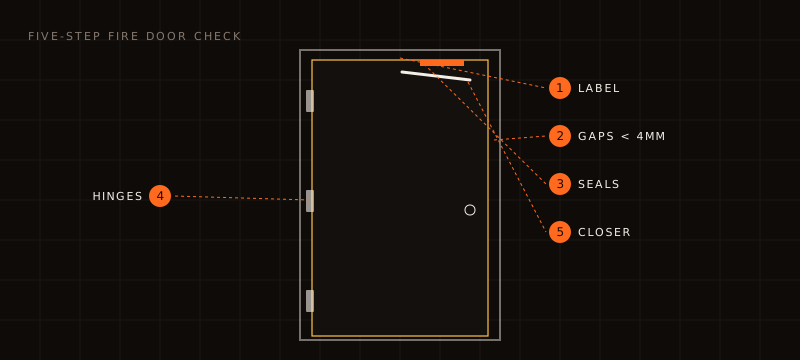
- Keep fire doors closed. My five-step fire door check takes a couple of minutes a door.
- Store extra packaging and cardboard securely outside, away from the building.
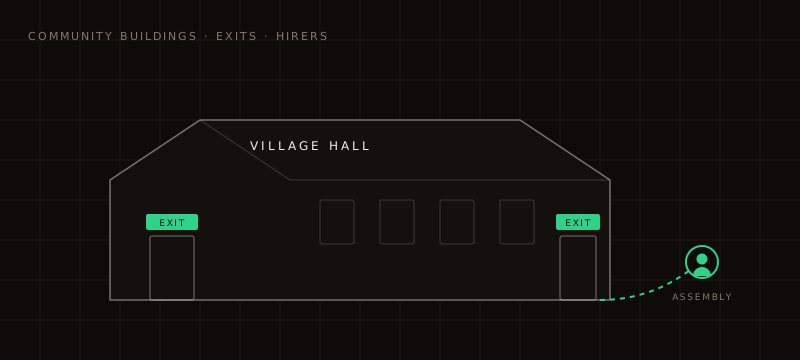
Seasonal and agency staff need telling too. The government guide counts people who are unfamiliar with the premises, such as seasonal workers, among those at risk, and Essex fire service advises training all seasonal staff in your fire procedures. Show them the exits, the assembly point and what to do when the alarm sounds on their first day. If you run a hall hosting Christmas events, my village hall guide covers briefing hirers.
A simple closedown routine
North Yorkshire Fire and Rescue Service recommends a closedown routine so that portable heaters and Christmas lights are switched off and unplugged. Make it one named person’s job at the end of each day:
- Portable heaters switched off and unplugged
- Christmas lights and electrical decorations switched off and unplugged
- Nothing that can burn left near a heater or lamp
- Fire doors closed
- Escape routes and exits clear of stock, boxes and decorations
- Cardboard and packaging moved to a secure store outside, away from the building
If your premises have changed for winter, or your fire risk assessment hasn’t been looked at for a while, I can help. Fire risk assessments start from £250 with a fixed quote and nothing to pay until the report is ready, and fire safety awareness training for seasonal staff starts from £120. Visits are usually booked 3 to 4 weeks ahead, so if you want it done before Christmas, now is the time. Call me on 07905 199 521 or send an enquiry, or see my services and prices.
Changed things for winter?
If heaters, extra stock, temporary staff or decorations have changed your premises, get a fresh fire risk assessment booked in.