
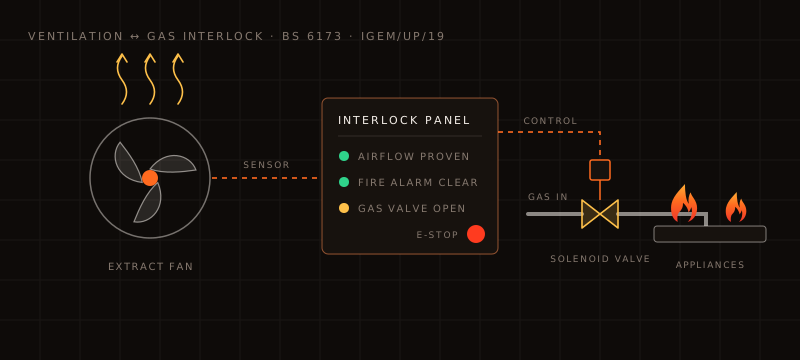
Gas interlock systems in commercial kitchens are among the critical fire safety features in many buildings.
For businesses in hospitality, care homes, education and offices, understanding gas interlocks is vital for both legal compliance and occupant safety. In this post I explain what gas interlocks are, how they work, the regulations in the UK, the risks, and how SPM Fire Safety Consultancy Ltd can help you manage them.
What is a gas interlock system?
A gas interlock system is a safety device designed to cut off the gas supply to appliances if the ventilation system fails or is insufficient. It prevents gas appliances such as ovens, boilers or hobs from working unless there is proven adequate airflow.
This is especially important where gas appliances are used alongside mechanical ventilation (extract fans), for example in commercial kitchens, care homes or large offices with canteens.
How does a gas interlock work?
These are the key components and how they operate:
- Ventilation and extraction system. The extractor fans remove fumes, heat and the products of combustion.
- Pressure or current sensors. These monitor whether airflow is above a safe threshold. Some systems use pressure differential switches, while others monitor fan current.
- Control panel. The interlock panel receives data from the sensors. If airflow is sufficient, it opens the gas solenoid valve so gas can flow to the appliances. If airflow falls below a safe threshold or fails completely, the valve closes and the gas is cut off.
- Gas solenoid valve. This valve controls the gas supply. When the required airflow, pressure or fan current is met, it opens and gas flows to the appliances.
- Emergency shut-off and integration. Interlock systems often have an emergency stop (local or remote) and can be connected to the fire alarm or building management system (BMS). If the fire alarm activates, the interlock shuts off the gas supply to the kitchen appliances.
What does this mean in practice? The extraction system has to be running, allowing the gas to flow, before any gas appliance can be used.
Why gas interlocks are required
Gas interlock systems are not just best practice. In many cases they are legally required:
- Under BS 6173, interlocks have been mandated since 2009 in new commercial kitchens, or where there have been upgrades, to prove that ventilation is working before gas is supplied.
- The IGEM/UP/19 standard (“Design and application of interlock devices … in commercial catering establishments”) sets rules for how interlock systems should be designed, including the type of proving required: airflow, pressure or current.
- Building regulations guidance also requires interlocking for “Category B” gas-flued catering appliances: if mechanical extract is needed for safe operation, the gas supply must be interlocked.
- There are important fire safety interfaces too. Interlock systems often need to integrate with fire alarm or suppression systems so gas shuts off automatically in a fire.
Failing to comply can have serious consequences: risk to life, legal and insurance liabilities, or fines.
What is the risk without an interlock?
Without a properly installed and working gas interlock:
- Gas builds up. If ventilation fails but the gas keeps flowing, dangerous gases such as carbon monoxide can accumulate.
- Explosion risk. Unchecked gas leaks can lead to fire or explosion.
- Health risk. Toxic combustion products threaten occupants and staff.
- Regulatory non-compliance. In commercial settings this can mean failed gas safety inspections, penalties or insurance problems.
- Operational disruption. If an interlock fault cuts the gas, appliances stop, which can shut down key operations such as a hotel kitchen or school canteen.
Where gas interlocks matter
In every type of building below, installing, testing, maintaining and using a gas interlock helps protect staff, visitors, residents and the building itself.
Hospitality
Gas interlocks are critical in commercial kitchens. In a restaurant, ventilation failure could shut down gas hobs, fryers and ovens, which affects food preparation and kitchen safety.
Retail and offices
For shops with a café or food preparation area, interlocks are just as important to protect staff and customers where gas appliances are used. Office buildings may also have canteens or commercial kitchen areas.
Medical settings and care homes
These buildings have vulnerable visitors and residents, so where there is a kitchen the risk is magnified: people may be exposed to toxic gases, and keeping kitchens running is vital for care.
Educational buildings
School kitchens, college canteens and university catering facilities are prime candidates. Gas interlocks help keep students and staff safe and support regulatory compliance.
Commercial premises
Any commercial premises, such as offices, workshops or pubs, that use gas appliances with mechanical ventilation should consider interlocks as part of their risk assessment.
Maintenance, testing and certification
To stay safe over time, gas interlocks must be:
- Installed by Gas Safe registered engineers. Only qualified professionals should install and commission interlock panels.
- Regularly serviced. Sensors, control panels and valves should be tested periodically to make sure they respond correctly.
- Integrated with safety systems. Regular fire system tests should include the interlock’s interface. Does the gas shut off when the fire alarm sounds?
- Certified. In commercial kitchens a CP42 certificate is often required, confirming that the system, including the interlock, meets gas safety regulations.
- Documented in risk assessments. When I assess your building, I note the presence, function and maintenance status of gas interlocks, because they directly affect fire risk and gas safety.
How SPM Fire Safety can help
- Identify. As part of your fire risk assessment, I check and advise whether your kitchen has a gas interlock system installed.
- Documentation and certification. If you have one, I’ll need to see evidence of testing and maintenance, such as maintenance logs and a CP42 certificate, so you can show compliance to insurers, regulators or auditors.
- Inform. I’ll recommend whether a gas interlock is required, or should be installed as best practice given the people who use the building, its location, an open-plan kitchen and so on.
Not sure where your kitchen stands?
Gas interlocks are checked as part of every fire risk assessment Steve carries out in premises with a commercial kitchen.
Keep reading
More insights

Defining a competent person for fire safety in the UK
What “competent” means for fire safety, and how to find the right person for your organisation.
Read article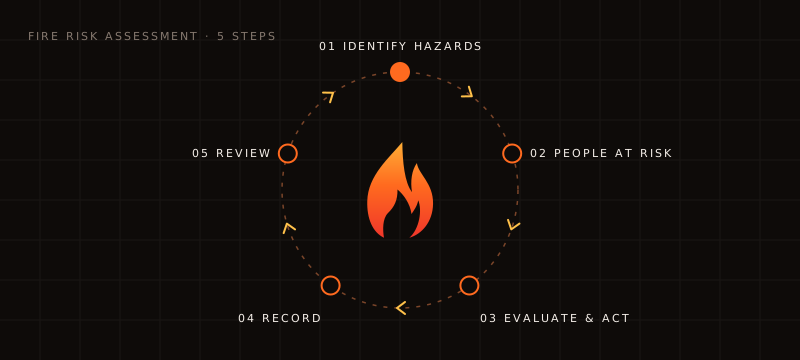
Comprehensive fire risk assessments explained
What a fire risk assessment covers, the five steps, and whether you can do your own.
Read article