There is no fixed number in law. Your fire risk assessment decides how many you need, and it depends on your building, your shifts and your people.
What the law says
Article 15 of the Regulatory Reform (Fire Safety) Order 2005 requires the responsible person to “nominate a sufficient number of competent persons” to carry out the evacuation procedures. A person is competent if they have sufficient training and experience or knowledge and other qualities to do it properly. The Order does not say what “sufficient” means; that comes from your fire risk assessment.
The rule of thumb
A commonly quoted starting point is about one fire warden for every 10 staff, with more in higher-risk premises. Treat it as a starting point, not an answer.
What actually decides the number
Areas and floors
Each floor, and each area where the hazards differ or that takes more than a minute to walk round, usually needs its own warden.
Shifts and opening hours
You need cover whenever the building is in use, including early starts, late finishes and weekends.
Absence
Holidays and sickness happen, so every warden needs a trained deputy.
Who is in the building
Members of the public, children, patients or people with disabilities need more help to get out, and so more wardens.
Assembly points
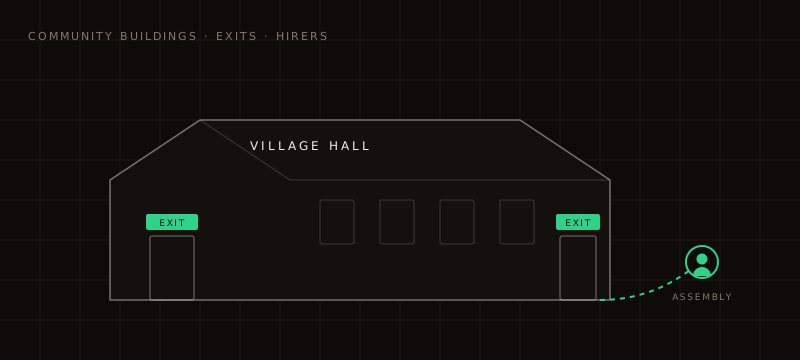
Someone needs to be at each assembly point to account for people and meet the fire service.
An example
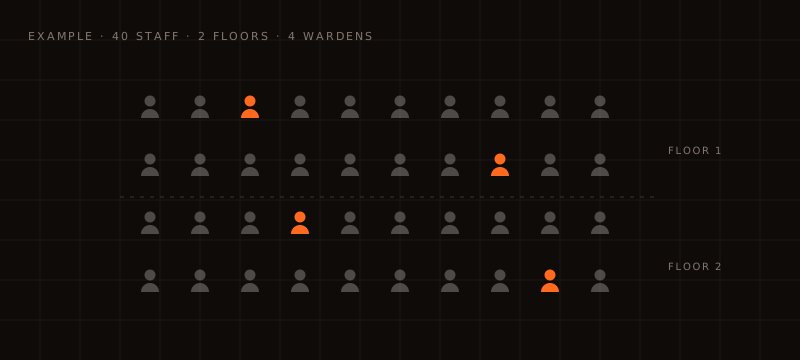
A two-storey office with 40 staff on one daytime shift: one warden per floor plus a deputy for each gives four trained wardens. Add an evening shift and you need cover for that too. This is only an illustration; your assessment decides.
Training your wardens
SPM Fire Safety’s fire warden training runs at your venue for up to 12 delegates, costs £400, and gives a certificate valid for 3 years. It is delivered by a qualified instructor and retired operational firefighter.
Train your fire wardens
Up to 12 people, at your premises, for £400.
Keep reading